$ cat runtime.check
AI-Written Code Can Pass Tests and Still Fail in Production
Generated code can look complete before it has met real traffic, real data, and real operational constraints. Production discipline remains the difference.
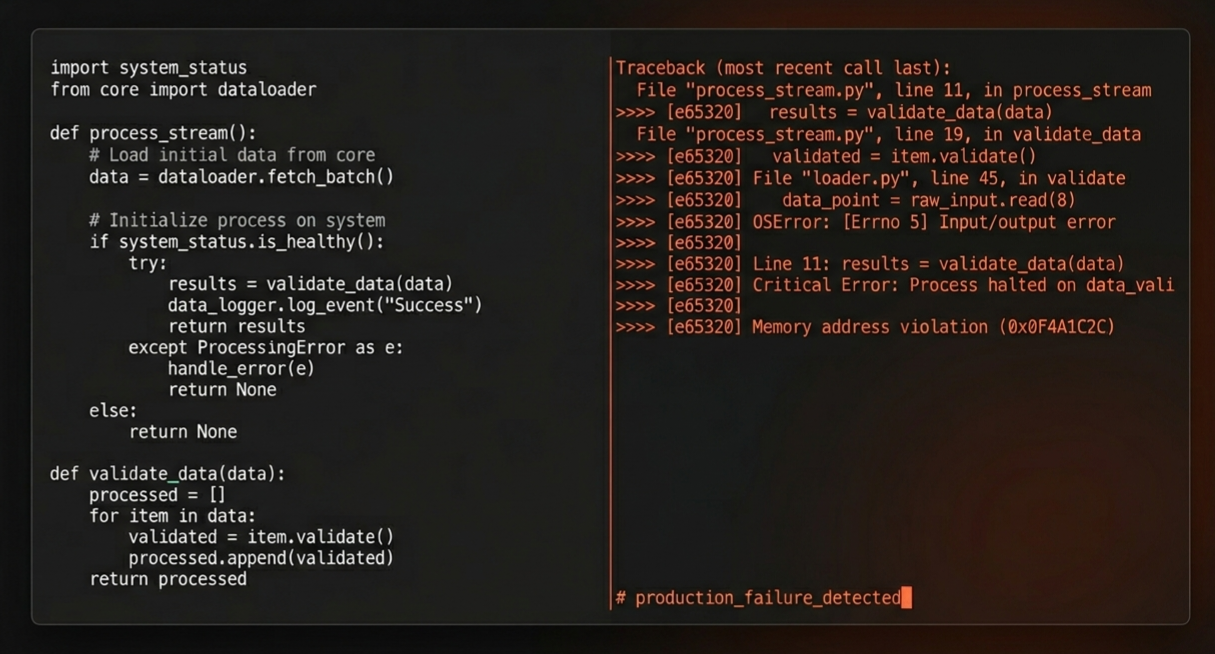
Code Is Only One Part of the System
An assistant can inspect a function and propose a convincing fix. It cannot automatically know the behavior of your traffic spikes, third-party integrations, stale caches, permissions, or the operational shortcuts hidden in a mature system.
That is why a change can be correct in a local test and still create an incident after release. The missing input is not intelligence. It is production context.
The Gaps That Tests Often Miss
Unit tests validate intended behavior in a controlled environment. They do not automatically validate queues under pressure, unexpected payloads, slow dependencies, or deployment order.
- Configuration and secret differences between environments.
- Data shapes that do not exist in fixtures.
- Timeouts, retries, and partial failures across services.
- Performance regressions that appear only under load.
Use AI Inside a Strong Delivery Loop
Generated code should follow the same path as human-written code: review, focused tests, staging verification, gradual release, and monitoring. AI can accelerate each stage, but it should not remove them.
generate -> review -> test -> stage -> release -> observe
What Engineers Still Own
The valuable work is increasingly the work around the code: defining the constraint, recognizing a risky tradeoff, measuring what changed, and responding when reality differs from the plan. AI makes that judgment more important, not less.