$ cat cost.meter
AI Development Tools Cost More When Usage Becomes the Product
AI coding subscriptions are evolving from simple monthly plans into measured infrastructure costs. Here is how to keep useful tools from becoming an invisible budget leak.
The Price Tag Is Moving
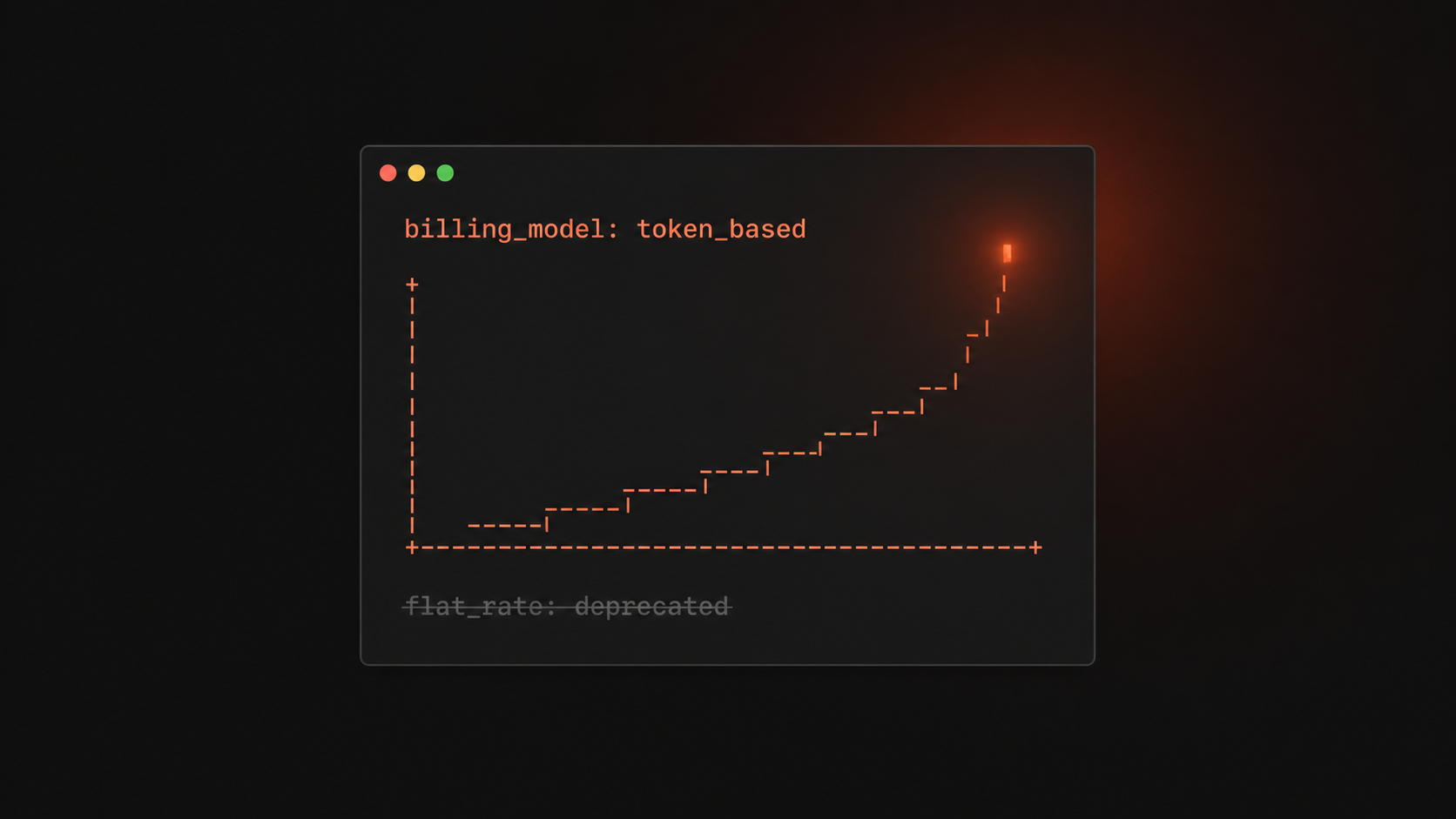
The useful question is no longer whether an AI assistant has a low entry price. It is how much context, agent time, and premium-model work your team consumes once the assistant becomes part of the daily workflow.
Flat subscriptions made experimentation easy. Usage-based pricing makes that experimentation visible. That can feel inconvenient, but it also gives teams a reason to understand which tasks genuinely benefit from deeper reasoning.
Where Costs Grow Quietly
The largest requests are rarely a single autocomplete. They are long-running agent sessions, repeated repository indexing, large pull-request reviews, and chats that carry a large conversation history.
- Using a premium model for routine formatting and small edits.
- Letting agents re-read large folders without a focused task.
- Running several assistants on the same problem without a clear owner.
- Treating every tool response as free because the bill arrives later.
Build a Deliberate Tool Mix
A practical setup uses the least expensive capable model for everyday work and reserves deeper reasoning for architecture, difficult debugging, and high-risk changes.
Track usage for a month before changing your workflow. Compare time saved, defects avoided, and actual spend. A tool that costs more can still be the better decision when it removes meaningful engineering friction.
The Working Rule
Treat AI services as engineering infrastructure. Give them an owner, a budget, sensible defaults, and a fallback plan. Teams that do this will keep the speed benefits while avoiding surprise costs.